SUZUKI Violin
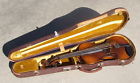
( Brand: Suzuki ), ( Part Type: Violin ), ( Size: 4/4 )
Review SUZUKI Japanese Violin No Reserve
Introducing the 1918-1920 Suzuki Violin, a vintage instrument with a rich history and exceptional craftsmanship. This violin, handcrafted during the early years of the Suzuki company, is a testament to the Japanese artistry and dedication to music that has made Suzuki a renowned name in the world of stringed instruments.
The 1918-1920 Suzuki Violin features a beautifully aged spruce top, which has developed a warm, rich tone over the years. The back and sides are made of fine-grained maple, providing the violin with a robust and resonant sound. The violin's varnish has a deep, amber hue, adding to its vintage charm and character.
The 1918-1920 Suzuki Violin is equipped with a high-quality ebony fittings, including a pegbox, fingerboard, and chinrest. The pegs are well-machined and easily adjustable, ensuring accurate tuning. The violin's strings are made from high-quality gut, providing a warm, rich tone that is characteristic of vintage instruments.
The fingerboard and pegbox are well-maintained, with no significant wear or damage. The violin's bridge is in excellent condition, and the sound post is properly aligned, ensuring optimal sound projection. The violin's finish is in good condition, with only minor signs of age and use.
The 1918-1920 Suzuki Violin is a wonderful instrument for both amateur and professional violinists. Its warm, rich tone and fine craftsmanship make it a joy to play, while its vintage charm and historical significance add an element of uniqueness and character to any collection. Whether you're looking for a beautiful instrument to play or a rare piece of violin history to add to your collection, the 1918-1920 Suzuki Violin is an excellent choice.
Pros of buying a 1918-1920 Suzuki violin:1. Historical value: The violin was made during a period when Suzuki was just starting to gain recognition as a violin maker. Owning a piece from this era could be an interesting addition to any violin collection.
2. Potential quality: Suzuki violins from this period were known for their fine craftsmanship and tonal richness. A well-maintained 1918-1920 Suzuki violin could provide a beautiful playing experience.
3. Rarity: Suzuki violins from this era are not as common as more modern models, making a 1918-1920 Suzuki violin a unique find.
Cons of buying a 1918-1920 Suzuki violin:1. Cost: Given their rarity and potential quality, 1918-1920 Suzuki violins can be quite expensive, which may be a prohibitive factor for some buyers.
2. Maintenance: Older violins require more frequent maintenance and repairs than modern violins due to aging materials and wear and tear. This could add to the overall cost of ownership.
3. Limited availability: Finding a 1918-1920 Suzuki violin in good condition can be challenging, as these violins may have been played or stored poorly over the years.
Conclusion: If you are a serious violin collector or musician with a substantial budget, a 1918-1920 Suzuki violin could be a worthwhile investment. However, it is essential to thoroughly research the instrument's condition, history, and authenticity before making a purchase. Additionally, be prepared to invest in regular maintenance and repairs to ensure the violin remains in good playing condition.
Recommendation: If you are interested in a 1918-1920 Suzuki violin, I would recommend consulting with a reputable violin dealer or expert to help you find a well-maintained instrument. They can provide you with valuable insights into the instrument's history, condition, and potential value, which can help inform your decision. Additionally, consider having the violin appraised by a professional to ensure that you are paying a fair price.
Details:
Original case is in fair condition, suitable for shipping.
There is no label, and no markings of any kind to be found. Total length 8 inches not including end pin back inches lower bout inches waist inches upper bout inches.
This is an old 4/4 japanese violin, made by Suzuki between 1918 and the back, neck, and ribs are of flame maple, and the top is very close grained spruce. All this instrument needs is a new set of strings and the sound post set, and it's good to go. The dimensions are.
There is a inch saddle crack on the treble side on the top, otherwise it is structurally sound. The sound post is inside the case the nut, pegs, tailpiece, fingerboard, and end pin are ebony.
The violin is fully lined and blocked.
- $49.00-$299.00
specifications otheracousticvioliniz:
- brand: Suzuki
- part type: Violin
- size: 4/4
Ratings:
- Thank you for an easy, pleasant transaction.Excellent buyer. A++++++. 09-15-15
- Thank you for your purchase and your fast payment come back again! A+ 08-17-15
- Fast payment. Great Buyer. Thank you very much! A+ 08-26-15
- Great Seller. Nice violin. Thank You. 07-22-15
- Perfect! Fast and smooth transaction. 07-28-15
Offer otheracousticvioliniz:
- best offer: false
- # bids: 0
- # Sold: 0
- quantity: 1
- Started: October 28, 2015, 5:00 am
- min. bid: $299.99
Payments otheracousticvioliniz:
- PayPal
Shipping otheracousticvioliniz:
- handling: 2 days
- type: Calculated
General otheracousticvioliniz:
- condition: Used
- Musical Instruments & Gear > String > Orchestral > Violins
- in stock: Yes
Seller otheracousticvioliniz:
- zipcode: 34788
- city: Leesburg, Florida
Returns otheracousticvioliniz:
- policy: no returns
Suzuki Is Similar To:
- Very Japan Violin Suzuki 16 Size 101rr Condition 1 Model Nice 1982 (33.3% similar) Suzuki violin model 101RR 1/1 6 size made in japan very nice condition original price 400...(January 19th, 2015)
- 199114022 16 Size 51925 Anno 1 Suzuki 220 Violin (34.1% similar) Suzuki violin no 220 size 1/1 6 annoy and book...(September 9th, 2015)
- 220cg Suzuki Anno Model Violin In Case No Bow (35.4% similar) Condition: please see photos - used no bow...(January 30th, 2019)
- 26917 Good 1 Violin Suzuki Used 220 10 8 Size Model (46% similar) It comes with a case in fair condition. This is a good used Suzuki 10 inch 1/8 size model 220 violin. This reduces the number of non serious buyers. The cost of shipping this item within the contiguous USA is there is no bow. All parts appear to be present. Our ultimate goal is buyer satisfaction. ...(March 10th, 2015)
- 335265 Suzuki Nagoya Violin Cased Set New Other (34.6% similar) Happy to answer any questions prior buying. Made in Nagoya, japan. 5 x 6 inches item model number 220FEO size 4 condition new other: never strung or played. The outfit includes instrument, a bracelet bow with horsehair, and case. Has several light marks where the tailpiece rested on body, otherwise ...(November 15th, 2018)
- 77079 Suzuki Nagoya Violin Model (39.4% similar) Case has 2 slots for bows and chubby bins, fur inside to protect your instrument. Very good condition. Made in Nagoya, japan NS30. Comes with 1 Glaser bow which could use restringing. This is a great instrument and will serve you well. Comes with case which is in great condition. Adjustable, needs 1...(April 3rd, 2017)
- 90158 Masakichi Suzuki Violin Model Size Year Nagoya (37.2% similar) Shipping: all domestic shipping is being handled via USPS priority, first class or FedEx ground depending on size and weight most of the charges are automatically calculated by calculator for accurate estimate, unless there fixed price free. Masking Suzuki violin model size 3/4 year 1979 serial no...(April 26th, 2018)
- 9044 Masakichi Suzuki Violin (38.7% similar) This is an authentic masking Suzuki 4 violin the hard case, bow, rosin and chin rest pad are included. Model 9044 serial number its in very good shape and has a few dings scratches...(August 23rd, 2018)
- Aus92386 Kiso Suzuki Japan Violin Anno Copy Of Antonius Stradivarusi (37.3% similar) The bottom of body is pulling apart and there some visual wear. 7 copy of Antonius Stradivarius 1720 is in good condition and functional. See the pictures. This ISO Suzuki japan violin annoy no...(October 29th, 2018)
- No.280 Suzuki Violin 1972 Kiso No.7 (31.9% similar) Up for bid, vintage 1972 ISO Suzuki violin co. With case and bow. Copy of Antonius Stradivarius 720 no. 7, 3/4 made in japan. Beautiful vintage violin in great shape and is 45 years old...(March 3rd, 2017)
- No.5 Masakichi Suzuki 4-4 Violin (33.3% similar) It does not seem to move. There is a glued crack between the f hole and bridge. There are two bows and several sets of strings included. Comes in duel violin case with 2 keys. Comes with zeta bridge and tailpiece pickup installed a cord. Made in Nagoya, japan sold as-is. Comes with a boss TU-11P ...(December 31st, 2017)
